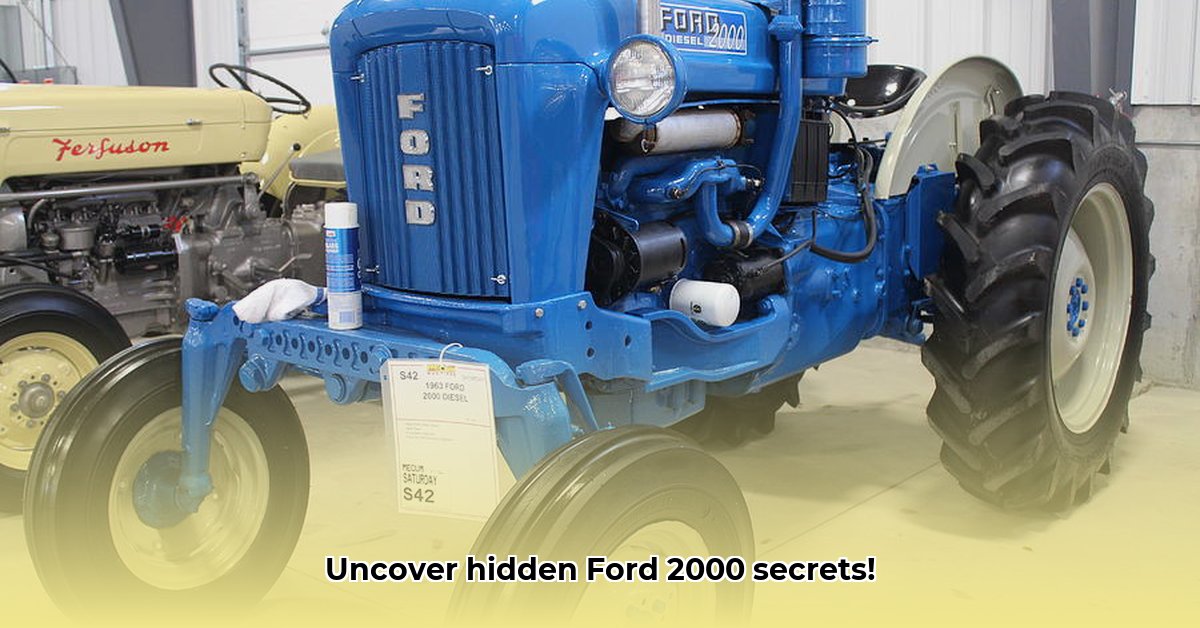
Ford 2000: A Comparative Look at the 4-Cylinder and 3-Cylinder Models
The Ford 2000 tractor, a stalwart of the 1960s agricultural revolution, holds a special place in the hearts of collectors and farming enthusiasts alike. But within this iconic model lies a subtle yet significant variation: the choice between a powerful 4-cylinder engine and a more fuel-efficient 3-cylinder counterpart. This article delves into the key distinctions between these two variants, offering insights for potential buyers, restorers, and history buffs. We'll examine everything from engine specifications to restoration challenges, providing a comprehensive comparison to help you understand the nuances of this classic machine. For more on values, check out this helpful resource: Ford 2000 Value.
A Glimpse into the 1960s Agricultural Landscape
The 1960s marked a pivotal era in agricultural mechanization. Farmers increasingly sought tractors offering greater efficiency and power. The Ford 2000, with its innovative design and varied engine options, directly addressed these demands. This period saw advancements in diesel technology, influencing the availability of fuel types. This historical context directly impacts the design choices of the Ford 2000’s powertrains. Did you know that the shift toward diesel engines significantly impacted the operating costs and maintenance needs of these tractors?
Under the Hood: Engine Specifications Compared
The heart of any tractor is its engine, and the 4-cylinder and 3-cylinder Ford 2000 models differ significantly in their powerplants.
| Feature | 4-Cylinder Model | 3-Cylinder Model | Notes |
|---|---|---|---|
| Horsepower | ~48.4 hp | ~39 hp | A considerable difference impacting pulling power. |
| Engine Type | Gasoline or Diesel | Primarily Diesel | Fuel availability and cost influenced the owner's decision. |
| Fuel Tank Capacity | 13 gallons | 13 gallons | Identical fuel capacity despite power output variation. |
| Hydraulic System Capacity | 2 gallons | 6.3 gallons | Noticeable increase in hydraulic capacity in the 3-cylinder version. |
This table highlights the substantial horsepower advantage of the 4-cylinder model, but the 3-cylinder's fuel efficiency often made it a preferred choice. The question arises: which engine type was actually superior? It really depends on the specific farming application and the farmer's priorities.
On the Farm: Assessing Real-World Performance
The engine differences directly translated into variations in on-farm performance. The 4-cylinder Ford 2000 excelled at heavy-duty tasks like plowing challenging fields, thanks to its superior pulling power. The 3-cylinder model, although capable, was ideally suited for lighter tasks or smaller farms, where fuel efficiency became a paramount concern. This difference in power and efficiency leads to a significant difference in operating costs and maintenance requirements. How would you choose between these two distinct workhorses?
Beyond Horsepower: Weight, Dimensions, and Maneuverability
Beyond engine power, weight and dimensions play a crucial role in a tractor's capabilities. The 4-cylinder model typically weighed between 3020 and 3362 pounds, while 3-cylinder variants ranged between 3280 and 4100 pounds—a significant weight difference. This variation may be linked to variations in manufacturing techniques or model year updates, revealing subtle details for collectors. The weight differential impacted both maneuverability and stability, influencing the tractor's suitability for diverse terrains and farming operations.
The Collector's Perspective: Restoration and Parts Availability
Both the 4-cylinder and 3-cylinder Ford 2000 tractors now attract collectors and restoration enthusiasts. Finding original parts can be challenging, particularly for older models and less common components. This makes the restoration process a labor of love for many, a testament to the enduring appeal of these vintage machines. Online forums and specialized parts suppliers offer crucial resources for those tackling such projects.
The Enduring Legacy: Ford 2000's Impact on Agriculture
The Ford 2000 tractor, regardless of its engine configuration, left an indelible mark on agricultural history. Its impact extends beyond mere functionality, representing progress in agricultural mechanization and reflecting the needs and innovations of its era. The continuous quest for improved efficiency and power continues to inspire both collectors and agricultural engineers alike.
Choosing the Right Ford 2000: A Practical Guide
The selection between a 4-cylinder and 3-cylinder Ford 2000 necessitates a careful consideration of individual needs and intended applications.
- Power vs. Efficiency: The 4-cylinder model offers superior power but sacrifices fuel efficiency. The 3-cylinder provides greater fuel economy but at the cost of reduced horsepower.
- Task Suitability: The 4-cylinder excels at heavy-duty tasks, while the 3-cylinder is more suited for lighter operations.
- Parts Acquisition: Restoration projects should account for the potential challenges in sourcing parts, which can vary significantly depending on the model and year.
Choosing the right Ford 2000 requires careful evaluation of these elements, ultimately aligning the tractor's capabilities with the specific demands of the farming operation.